
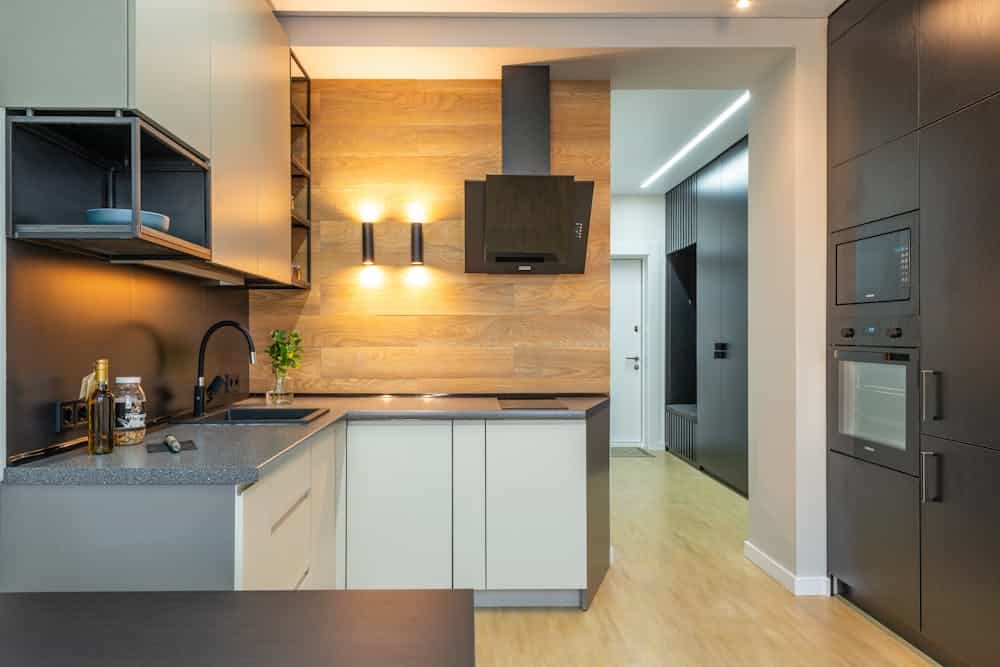
Your choice of kitchen cabinet material determines how they perform, age, and look. You need kitchen cabinets to withstand daily use, humidity, spills, and years of opening and closing. In order to decide which will be right for your situation, you need to appreciate the qualities of every material option.
Our favorite material for durable kitchen cabinets is solid wood, followed closely by high-grade plywood. MDF, particleboard, and thermofoil trail behind because they offer dependable performance on a budget. Stainless steel is the most durable, but it is costly and challenging to remodel.
Let’s break down the top five kitchen cabinet materials and explain how each one performs in real kitchens. You’ll see where every option shines, where it falls short, and how to match the right material to your design goals, lifestyle, and long-term expectations.
What Makes a Kitchen Cabinet Material Durable?
1. Resistance to Moisture and Humidity
Though families and individuals vary, most kitchen cabinets are exposed to steam, spills, and lingering humidity. Such moist environments are an invitation to mold, bacteria, and water damage.
The most durable cabinet materials can withstand moisture exposure. They don’t deteriorate; they don’t crack, soften, or rot.
2. Resistance to Warping and Cracking
Your living/ sitting area may be warm when everyone is bonding at home, but it can never get as hot as your kitchen. The sharpest temperatures and humidity are often high in your kitchen.
Temperature fluctuations cause wood to expand or contract. Uneven expansion happens when your wood isn’t completely dry when it’s installed.
The wood could also have gradually absorbed moisture from the air, leading to uneven expansion and contraction and causing warping and cracking.
Engineered wood has a more stable composition than natural wood, thanks to layers of plywood or high-density fiberboard (HDF) beneath the hardwood veneer.
3. Longevity Under Everyday Use
What sees more daily action in your kitchen than the cabinets? Maybe the water faucets or the fridge, but that’s about it. Cabinets still see the most action because you’re more likely to bang your cabinet’s door than your fridge’s.
Daily life puts cabinets through a surprising amount of stress. Durable materials withstand constant opening and closing, and the added weight on shelves.
It’s not durable if it can’t withstand bumps, scrapes, and stacked cookware.
4. Maintenance Needs
Some materials demand little more than a quick wipe, while others need careful cleaning or regular refinishing.
A durable cabinet material doesn’t fight you. It withstands real-world messes, cleans easily, and stays attractive without constant upkeep.
You also don’t want cabinet materials that deteriorate because you wash or wipe them regularly, as long as you wipe them dry.
5. Timelessness
Timelessness is an aspect of cabinet durability that most homeowners overlook. Your cabinet can fit the four aspects of cabinet durability and lack timelessness. What do you do with mint-condition cabinets that quickly run out of style, and no one wants to buy them?
You want guests and household members to feel that your cabinets are modern and stylish ten or twenty years down the line. You also never know when you might need to sell your house to improve your and your family’s prospects.
6. Performance Over Time in Modern Kitchens
Modern kitchens often use open layouts, large appliances, and more built-in lighting, all of which expose cabinets to extra heat and light.
Quality materials are sturdy, so they don’t lose structural integrity. They also don’t fade quickly, maintaining a clean aesthetic.
1. Solid Wood: Timeless Strength and Longevity
Solid wood tops this list, thanks to its natural strength and long-term stability in a kitchen. Hardwood species retain their shape, withstand repeated use, and develop character rather than degrade over time.
Solid wood is also the oldest, most available, and most sustainable building material on the planet. It has been used for centuries in construction, furniture making, and cabinetry due to its strength and longevity.
Trees are a renewable resource, so responsibly harvested wood trumps all other materials when considering environmental impact.
How Solid Wood Holds Up in Real Kitchens
Hardwood doors and frames resist dents, scratches, and household impacts. The material handles regular opening and closing without loosening or weakening.
As for temperature and humidity fluctuations, hardwood expands and contracts predictably as long as it is dried to the proper moisture content. Skilled cabinetmakers can anticipate this movement and create solid, long-lasting pieces.
Common Species Used for Durability and Beauty
The following are four of the most popular hardwood species used by cabinetmakers and furniture builders. Each one uniquely offers durability, strength, and beauty.
Maple
This species is popular for its strength and resistance to wear and is ideal for cabinets and flooring. Most homeowners like it for showcasing stain or paint finishes thanks to maple’s uniform texture and minimal grain patterns.
Cherry
Cherry is a prized species due to its rich color and smooth finish. It’s also durable and resistant to warping, making it a favorite among homeowners for high-end furniture.
Oak
This species has distinctive grain patterns and warm color tones, so it adds character to any piece of furniture. It’s durable and withstands heavy use.
Hickory
This wood species is strong and sturdy, making it a popular choice for kitchen cabinets. It has a unique grain pattern with varying shades of light and dark wood.
Strengths and Limitations
Solid wood offers unmatched longevity, warm texture, and a premium look. It also allows refinishing if the homeowner wants a new color years down the road.
The main tradeoff comes from cost and sensitivity to large humidity swings, which require a well-ventilated kitchen and a quality finish. Even so, solid wood sets the standard for long-term performance.
For more details, go over: kitchen cabinets veneer vs. solid wood.
2. Plywood: Strong, Stable, and Reliable
Plywood closely follows solid wood because its layered construction provides impressive strength and dimensional stability. Each cross-bonded layer reinforces the next, which helps the panel stay flat, resist warping, and support heavy loads.
Quality cabinet manufacturers rely on plywood for boxes, shelves, and structural components. Here’s why plywood trails solid wood in this list: ‘Plywood vs. Solid Wood Cabinets.‘
How Plywood Performs in Real Kitchens
Plywood withstands the heat, moisture, and movement of a busy kitchen without bending or breaking. It is sturdy and doesn’t sag on wide shelves. So, you can place dishes, cookware, and small appliances on it.
When humidity rises or the temperature swings, plywood remains consistent, keeping drawers smooth and doors aligned.
Strengths and Limitations
Plywood offers a strong balance of price, durability, and performance. It brings better moisture resistance than particleboard or MDF and weighs less than solid wood.
Plywood costs much less than solid wood, making it a more affordable option for kitchen cabinets. It’s also available in larger sizes, meaning you can cut it for smaller, custom shapes.
What’s the downside? Plywood differs in quality, and low-quality plywood warps easily. Homeowners who choose high-grade plywood see the real benefits:
- Resilience.
- Structure.
- A kitchen that feels solid every day.
So, what is the best plywood for kitchen cabinets?
3. Medium-Density Fiberboard (MDF): Smooth and Stable
MDF is third on this list because it delivers reliable stability and a flawless surface ideal for painted finishes. Its dense, uniform composition leaves no grain lines or knots.
Manufacturers take advantage of the uniformity to create crisp door profiles and smooth modern styles that homeowners love.
If you’re wondering why it’s below plywood in this list, go over this post: ‘MDF vs. Plywood Cabinets.‘
How MDF Performs in Real Kitchens
MDF handles day-to-day use without warping or cracking, especially when sealed and painted correctly.
It endures seasonal humidity shifts thanks to its smooth surface. It’s also sturdy and withstands minor impacts. So, it’s ideal for:
- Shaker doors.
- Slab fronts.
- Contemporary designs that rely on clean lines.
Strengths and Limitations
This cabinet material allows for precise detailing and a premium look. It’s ideal for homeowners who want painted cabinets with consistent color and texture.
However, MDF absorbs water and begins to deteriorate over time with prolonged moisture exposure. Without proper finishing, MDF will warp and begin to rot.
MDF stays attractive and dependable for years if you apply a finish on it and place it away from wet kitchen areas.
4. Particleboard: A Budget-Friendly Option
Particleboard sits lower on the durability scale, but it still brings real value to a remodel. Many big cabinet brands use stronger, denser furniture board versions that hold up better than people expect.
When you need to stretch your budget, particleboard helps you get the look you want without overspending.
How Particleboard Performs in Real Kitchens
Particleboard handles daily use well as long as it stays dry. It supports pantry items and dishware without trouble when the shelf spans stay reasonable.
In a climate-controlled kitchen, the material stays stable and keeps your project affordable. It works best when you place it away from constant moisture and heat.
Strengths and Limitations
Particleboard cuts costs and keeps your cabinets lightweight. It’s also so smooth that you can finish it with thermofoil.
Exposure to long-term moisture causes it to swell. If you manage those risks, particleboard delivers solid value and keeps you within budget.
5. Thermofoil: Durable Finish with Modern Appeal
Thermofoil is a cost-effective means of giving your kitchen a clean, modern look. The idea is wrapping a smooth PVC layer over an MDF core, creating a consistent edge-to-edge finish.
Homeowners love the:
- Simple style.
- Easy cleaning.
- Wide range of colors.
It also works well in busy households that need cabinets to stay fresh with minimal effort.
How Thermofoil Performs in Real Kitchens
Thermofoil endures daily use by withstanding scratches. It also makes it easy to wipe off fingerprints and most spills.
It performs best when kept away from extreme heat, such as the sides of ovens or the space above a toaster. In normal conditions, it stays smooth and dependable for years.
Strengths and Limitations
Thermofoil offers style, affordability, and low maintenance. It fits modern kitchens that want clean lines and simple care routines.
The real strength of thermofoil lies in its moisture resistance and consistent finish. However, too much heat can loosen the adhesive and cause peeling, so you need heat shields around appliances.
A properly installed thermofoil rewards you with durability, functionality, and beauty.
Which Material Is Best for Modern Kitchens?
Modern kitchens require durable materials so they remain strong and aesthetically pleasing. The best cabinet material for durability is relative, depending on your style, budget, and kitchen usage.
Solid wood and high-grade plywood deliver the best long-term durability. They keep their shape, support heavy loads, and withstand years of humidity and heat.
MDF comes second for homeowners on a budget. It’s only suitable for modern kitchens when you couple it with thermofoil for simple maintenance and a sleek look.
Particleboard is ideal for budget-conscious projects, mainly when used in low-moisture areas. Once you match the material to your needs, the cabinets stay attractive and dependable for years.
Ready to Choose the Right Cabinet Material?
Here’s Your Next Step
Durability matters, but your final choice also depends on preference, layout, and budget. It’s easy to make the wrong choice and regret it later when your money is already spent.
That’s why we hold your hand through this process. Designer Cabinets Online helps homeowners, designers, and contractors pick the right materials every day.
We’ll guide you toward options that fit your vision. We also help you avoid overpriced showroom markups while getting premium custom cabinets.
You get expert support, high-quality materials, and real savings. Let’s help you build a kitchen that stays beautiful, strong, and functional for years.