
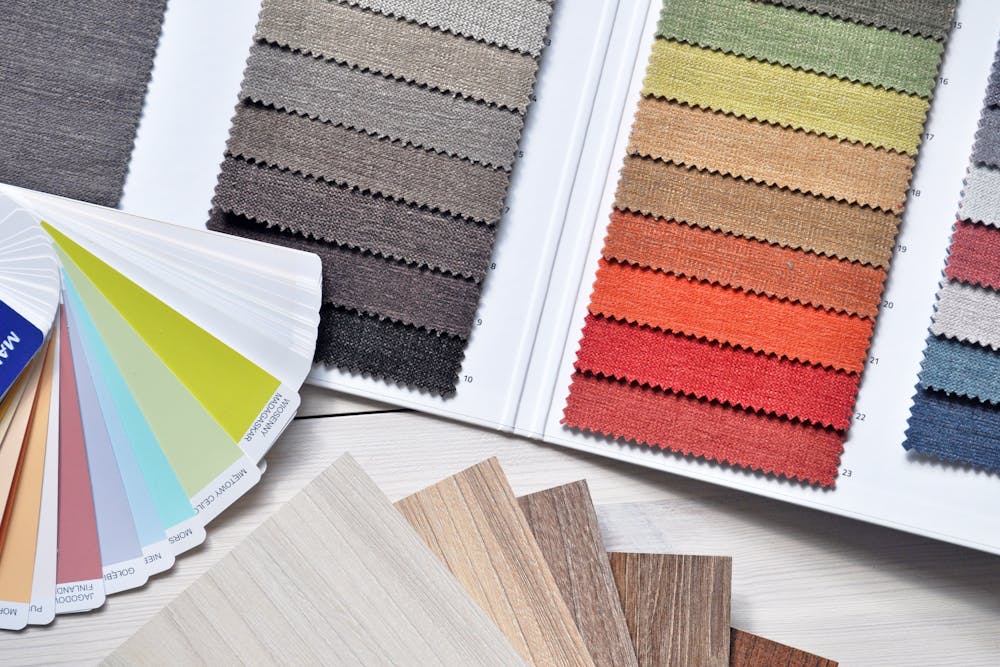
One of the most common and exhilarating (if you get excited about such things like we do) dilemmas you can ever face as a homeowner is settling on the right wall color for your cabinet shade. That choice dictates if your cabinets look rich, washed out, sharp, or dull. So, which wall color works best with your cabinets?
Matching wall and cabinet colors with intention will reward you with an inviting, cohesive, and modern look. The answer starts with undertones, lighting, and balance.
- Neutrals support warm cabinets.
- Cool shades require crisp contrast.
- Bold colors complement calm surroundings.
- Soft shades match with defined edges.
In this guide, you’ll see how kitchen cabinet paint colors pair with the most reliable wall shades. You’ll get clear examples, simple rules, and designer-backed combinations you can use right away.
How to Choose the Best Wall Color for Your Cabinets
1. Consider lighting (natural + artificial)
Lighting changes everything.
Natural light shifts from one side to the other as the day progresses. For example, East-facing rooms are brightest in the morning, while West-facing rooms see intensifying light in the afternoon. So, a color that looks soft in the morning may appear sharper at night.
You’ll need artificial light for nights, and it’s very different from natural light. You may also need artificial lighting during the day if the natural light is restricted or insufficient.
Please note that warm LEDs add yellow tones, while cool LEDs add blue undertones.
The goal is balance. If your kitchen has warm lighting, cooler wall colors can neutralize the space. If it has cooler lighting, warmer tones help avoid a sterile look.
Tip: Always test paint samples on more than one wall. Light hits each surface differently.
2. Identify Your Cabinet Undertones
If you didn’t know, even neutral cabinets have undertones.
White cabinets may lean warm (yellow) or cool (blue), while gray cabinets often lean slightly green or purple. In contrast, wood cabinets often shift toward red, orange, or gold.
Paint reacts to these undertones. If the undertones clash, the entire kitchen can look off, even when both colors look great on their own.
A quick test entails holding a plain sheet of white printer paper next to the cabinet. Any hidden undertone jumps out immediately.
3. Choose Between Coordinating or Contrasting Colors
You have two main strategies: blend or contrast.
- Coordinating colors with similar undertones creates a smooth, seamless look. Think warm cabinets with warm wall colors or cool with cool.
- Contrasting colors use opposing tones to create depth. For example, dark cabinets with light walls. Blue cabinets with creamy neutrals. It adds visual structure without crowding the room.
If you’re unsure which direction to take, contrast usually feels safer. It also keeps the kitchen from feeling flat.
4. Consider the Style of the Kitchen
Of course, the greatest determinant of all colors, layout, and even furniture depends on your preferred kitchen style and design. For instance,
- Modern kitchens often pair with crisp whites, grays, or soft neutrals. These colors give you clean lines and a sleek finish.
- Farmhouse kitchens lean on warm whites, muted greens, and earthy tones.
- Traditional kitchens work well with richer colors like taupe, beige, or soft gold.
Matching the wall color to the kitchen’s architecture keeps the space cohesive.
5. Use Color Temperature to Your Advantage
Color temperature affects mood.
- Warm colors (beige, cream, tan, warm gray) feel inviting. They’re great for busy kitchens where people gather.
- Cool colors (soft blue, gray, pale green) feel calm and clean. They work well in smaller kitchens because they visually “push” the walls outward.
Cabinet color helps guide which temperature works best. Warm wood cabinets often look better with warm walls.
Cool cabinet finishes, like gray or navy, usually pair better with cool walls.
6. Know When to Go Neutral or Bold
Neutral walls create flexibility as you can change the décor without repainting. They also keep the focus on your cabinets, which is ideal if you invested in a premium finish.
Bold colors add personality but require more planning. Deep greens, navy blues, and charcoal tones look stunning with light cabinetry. They also create contrast without overwhelming the room.
As a rule, if the cabinets are the statement piece, go neutral on the walls. If the cabinets are simple or light, a bold wall color can define the entire kitchen.
7. Test Before You Commit
Paint always looks different in real life. Lighting, shadows, cabinet sheen, and flooring all influence how a color reads.
Always test:
- At least three sample colors.
- On multiple walls.
- In morning, afternoon, and evening light.
It takes a few minutes, but it prevents expensive mistakes.
Best Wall Colors for White Kitchen Cabinets
White cabinets are popular for a reason. They’re clean, bright, and work with almost any design style.
However, the wall color you choose can completely change how those cabinets look. The wrong color can make white cabinets feel harsh, dingy, or sterile.
Below are the best wall colors to pair with white kitchen cabinets and why they work.
1. Soft Grays
Soft gray is one of the safest and most balanced choices because it adds a gentle contrast without making the room feel darker. Gray also works well because it sits between warm and cool, depending on the undertone you pick.
Grays with blue undertones give the kitchen a crisp look, while those beige undertones add warmth and prevent the space from feeling sterile.
This combo works especially well in modern and transitional kitchens.
2. Navy Blue
Navy blue instantly adds contrast. It’s bold but still grounded, which is why it pairs so well with pure white cabinets.
This combination sharpens the room’s edges and defines the cabinet lines.
It’s also an easy way to create a high-end, designer look without changing cabinetry.
Navy contains dark pigments that reduce light reflection, making it ideal for kitchens with good natural light or bright LED fixtures.
3. Warm Beige
Warm beige creates a soft, inviting atmosphere. It blends beautifully with white cabinets, especially if the cabinets have warm undertones.
This shade suits traditional, farmhouse, or rustic kitchens. It also softens stainless steel appliances, reducing the coldness they can impart.
If your white cabinets lean toward yellow or cream, warm beige keeps everything consistent.
Best Wall Colors for Off-White or Cream Cabinets
Off-white and cream cabinets add warmth and softness to a kitchen. They’re not as stark as pure white, so the wall color needs to support that warmth without washing the cabinets out.
These shades also have stronger undertones, so pairing them with the right wall color keeps the whole room balanced and intentional.
1. Warm Taupe
Warm taupe blends beautifully with cream cabinetry as it carries both brown and gray tones. So, it adds depth without feeling heavy.
The warmth matches the cabinet undertones, preventing the walls from looking too cool or mismatched.
Taupe also has low chroma, which means it reads soft and muted. So, it keeps the room calm and prevents the walls from competing with the cabinets.
2. Soft Green
Soft green creates a gentle contrast with off-white cabinets. It brings a natural, earthy feel that works well in farmhouse, cottage, or classic kitchen designs.
It works because green sits opposite red on the color wheel and offers a cooling contrast to yellow undertones. Since cream cabinets often lean slightly warm, soft green helps balance that warmth without making the space feel cold.
3. Warm Gray
Warm gray is a safe, flexible choice. It adds a modern touch while keeping the room feeling cozy. Warm gray has beige or brown undertones, so it pairs perfectly with cream without creating a sharp contrast.
If your kitchen has mixed lighting, cool daylight, and warm bulbs, warm gray helps stabilize the color across the room.
Best Wall Colors for Gray Cabinets
Gray cabinets are versatile, modern, and easy to pair with a wide range of wall colors. The key is understanding the cabinet’s undertone because gray isn’t just gray. It can be warm, cool, or even slightly green or blue.
Once you know that, choosing the right wall color becomes intuitive and straightforward. Like knowing what color cabinets go with gray walls?
1. Crisp White
Crisp white yields a clean, bright contrast with gray cabinets. It sharpens cabinet lines, boosting reflectivity and making the entire kitchen feel lighter.
It works because white suits visual resets by neutralizing undertones, even when your gray cabinets lean slightly warm or cool. So, it’s one of the most forgiving wall choices.
It’s best for modern, minimalist, or Scandinavian-inspired kitchens.
2. Navy Blue
Navy blue adds strong contrast, giving gray cabinets a bold backdrop. This pairing feels rich and sophisticated without overwhelming the space.
This hue absorbs a lot of light due to its low reflectance value. That’s why it works best in kitchens with good natural light or bright task lighting. Gray cabinets help break up the darkness, maintaining a much-needed balance.
3. Soft Blush or Muted Rose
Soft blush oozes a subtle warmth, and it pairs surprisingly well with gray. It adds a slight color lift without turning the kitchen pink.
Why does it work? Blush contains red undertones. Those undertones warm up cool grays and soften the overall palette.
The result is a gentle, calming mix that feels updated without being loud. Great for contemporary or transitional designs.
4. Light Gray-on-Gray Combinations
Using light gray on the walls with medium- or dark-gray cabinets creates a tone-on-tone look. That way, you keep the palette simple and balanced while adding dimension.
Gray-on-gray works because the values (lightness levels) differ. As long as the cabinet color is darker, the walls won’t blend in. The contrast stays soft, but still noticeable.
This approach is ideal if you want a sleek, cohesive design without firm color shifts.
Best Wall Colors for Wood Cabinets (Light, Medium & Dark)
Wood cabinets inject warmth and texture into a kitchen. There are three popular wood tones:
- Light.
- Medium.
- Dark.
They all reflect light differently, and so you need to identify the right color wall to balance brightness and highlight the natural grain.
These pairings keep the room feeling intentional and avoid clashing undertones. Here are the best wall colors for each major wood cabinet category.
1. Light Wood Cabinets (Maple, Oak, Natural Finishes)
Light wood cabinets feel airy and organic. They pair well with soft, muted wall colors because such tones don’t overpower their natural grain.
Best Wall Colors
- Soft white.
- Warm gray.
- Light sage.
Light woods often have yellow or honey undertones. Choosing wall colors with gentle warmth keeps the room cohesive and avoids sharp temperature shifts.
It’s ideal for Scandi, modern, and airy kitchen styles.
2. Medium Wood Cabinets (Honey Oak, Medium Cherry, Early American Finishes)
Medium wood tones bring richness and warmth. They need wall colors that soften the warmth rather than amplify it.
Best Wall Colors
- Warm taupe.
- Sandstone.
- Soft powder blue.
Blue-based neutrals balance the strong golden or reddish undertones found in medium woods. It creates a calmer, more modern look without fighting the cabinet finish.
Great for transitional and traditional kitchens.
3. Dark Wood Cabinets (Walnut, Espresso, Mahogany)
Dark wood cabinets feel bold and sophisticated. Lighter wall colors keep the kitchen from looking too heavy.
Best Wall Colors
- Crisp white.
- Light gray.
- Soft taupe.
Dark woods absorb more light. Lighter wall colors reflect light back into the room, improving brightness and preventing a cave-like feel.
Perfect for modern, classic, and luxury-style kitchens.
Best Wall Colors for Black or Espresso Cabinets
Black and espresso cabinets create a dramatic, high-contrast look in the kitchen. They instantly feel modern and upscale, but they also absorb a lot of light.
The right wall color helps balance that depth, brighten the space, and keep the room from feeling too closed in. These pairings highlight the richness of dark cabinetry while maintaining a comfortable, inviting atmosphere.
Here are the best wall colors for kitchens with black or espresso cabinets.
1. Bright White
Bright white creates the strongest contrast. It highlights the cabinet lines and immediately lifts the room’s brightness.
White reflects the most light of any wall color, helping to counter the light absorption of black and espresso finishes, keeping the space crisp and open.
It suits modern, minimalist, and high-contrast designs.
2. Pale Gray
Pale gray softens the intensity of dark cabinets by adding contrast without the stark jump you get from bright white.
It has low chroma and mid-range reflectivity, giving you enough brightness to balance dark cabinets while still maintaining a modern, muted palette.
It’s ideal for contemporary and transitional kitchens.
3. Soft Beige or Warm Neutral
Soft beige warms up the kitchen and creates a balanced, inviting feel. It tones down the strong visual weight of black or espresso.
Warm neutrals add yellow or brown undertones, which complement the rich brown or near-black pigments in espresso finishes. They also help black cabinets feel less stark.
It’s great for kitchens with wood floors or warm lighting.
Best Wall Colors for Two-Tone Cabinets
Two-tone cabinets are a strong design feature. They add depth, break up visual weight, and create a custom, high–end look. However, the wall color you choose has to work with both cabinet shades.
The goal is to unify the palette without overwhelming the room or competing with the contrast. Here are the best wall color strategies for two-tone kitchens.
1. Neutral Whites
Neutral whites are the easiest option because they let both cabinet colors breathe, keeping the layout clean.
Neutral whites have minimal undertone so that they won’t clash with warm or cool cabinets. They frame the cabinetry, allowing the two-tone design to stand out.
2. Soft Grays
Soft gray creates a smooth transition between the upper and lower cabinet colors. It adds gentle contrast without stealing attention from the two-tone layout.
Gray sits near the center of the color temperature scale, allowing it to bridge warm and cool shades. If your cabinets mix warm wood and cool paint, gray stabilizes the palette.
Ideal for contemporary or minimalist designs.
Ready to Bring Your Kitchen Design Together?
Choosing the right wall color comes down to balance. Your cabinets set the tone, and the wall color either supports that tone or shifts it.
Designer Cabinets Online can help you match cabinet finishes, colors, and layouts with confidence. If you’re planning a remodel or just refreshing your space, our team can guide you toward the best options.